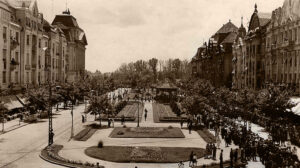
It is nowadays one of the busiest squares in Timișoara and its name is 500 years old. Legend says that Mary’s Square was once the place of a miracle. It happened a few centuries ago…
The story begins in 1514, with the revolt of György Dózsa, a Székely nobleman from Transylvania who led a peasants’ revolt against the kingdom’s landed nobility. He was eventually caught and executed in Timișoara, along with his followers.

After the revolt was repressed some 70,000 peasants were tortured. The leader, György Dózsa, was condemned to sit on a heated iron throne and to wear a heated iron crown and sceptre.
A strange appearance
A procession of nine fellow rebels who had been starved beforehand were led to this throne. In the lead was Dózsa’s younger brother, Gergely, who was cut in three despite Dózsa asking for Gergely to be spared. The remaining rebels were ordered to bite spots of their leader’s skin. The three or four who refused were simply cut up, prompting the others to comply. In the end, Dózsa died from the ordeal, while the rebels who obeyed were released.
According to the legend, during György Dózsa’s torture, some monks saw in his ear the image of Mary. They put an icon on the site of the martyrdom and in 1865 the first statue was raised. Today, on the site of the martyrdom of the hot throne, there is the statue of The Virgin Mary, built in 1906 by architect László Székely and sculptor György Kiss.